
How to Decorate an Empty Living Room from Scratch (Without a Designer)
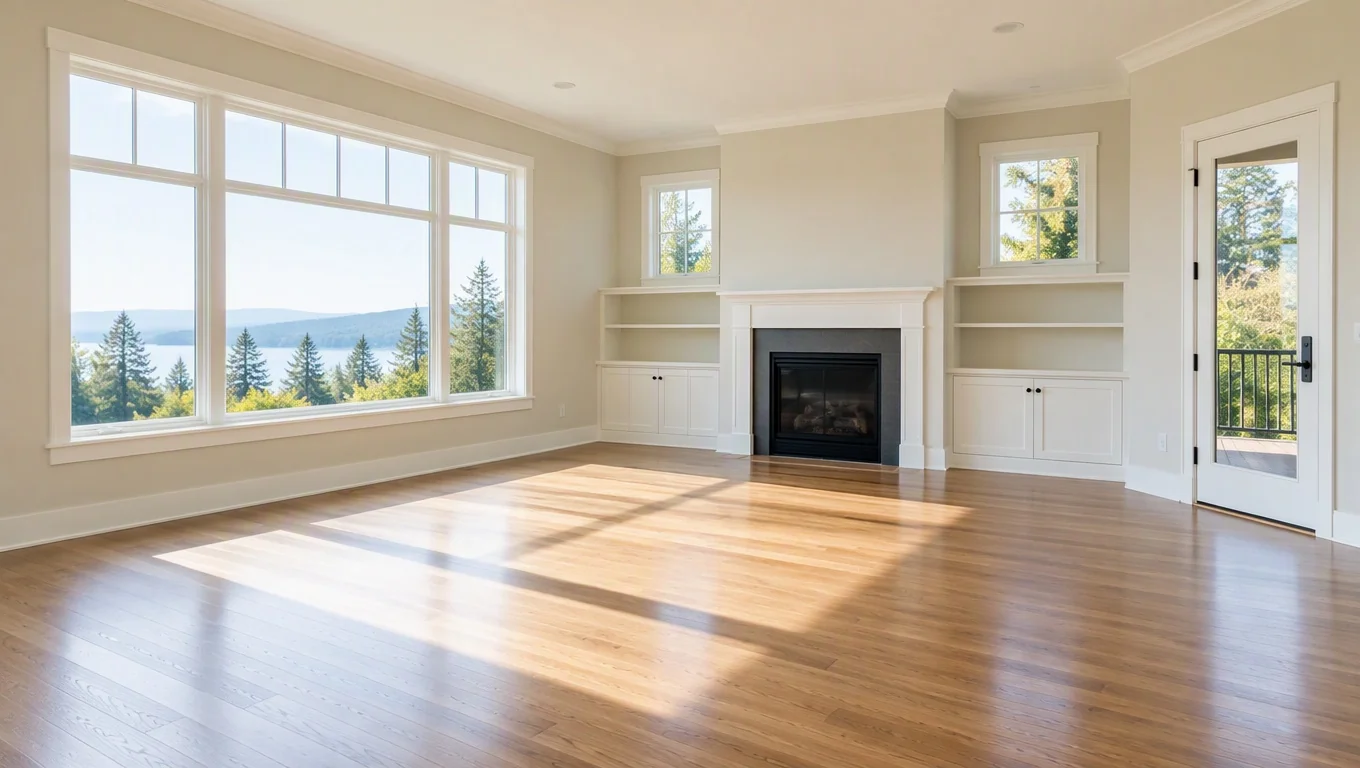
Introduction
To decorate an empty living room from scratch, work in four moves: measure the space, anchor the room with your biggest piece first (usually the sofa), plan the layout around walking paths and clearances, then layer in decor last. That order stops you from buying a beautiful chair that blocks a doorway or a rug that swims in an oversized room. You can do all of it yourself, no designer required.
If you just moved in and you are staring at a bare living room, the fear is real: what do you buy first, and how do you avoid an expensive mistake? This guide walks you through the exact steps to furnish an empty living room with confidence, and shows how previewing furniture in your actual room, before you order it, quietly removes most of the risk.
What You'll Need
You do not need much to start. Gather these before step one:
- One clear daylight photo of the empty room, taken straight-on from the doorway so you capture the full floor and main walls.
- A tape measure (or a laser measure) and your phone to jot numbers down.
- Painter's tape to mark furniture footprints on the floor. It's cheap and reusable.
- A rough budget, even a loose one, so you know which pieces to prioritize.
That's it. The photo matters most: it lets you test furniture and colors digitally before anything ships to your door, which is where the costly buying mistakes usually happen.
Step-by-Step Guide
Here is the full process, in the order that saves you the most money and second-guessing.
Step 1: Measure the room and map the fixed features
Start with the walls, then note everything you cannot move: doorways, windows, radiators, the TV outlet, and where the light switches sit. Write down the room's length and width, plus the width of each doorway. Why it matters: every furniture decision downstream depends on these numbers. A sofa that looks perfect online can be too deep to fit past your entry, and a room that reads "small" in a photo is often wide enough for a full seating group once you have real measurements.
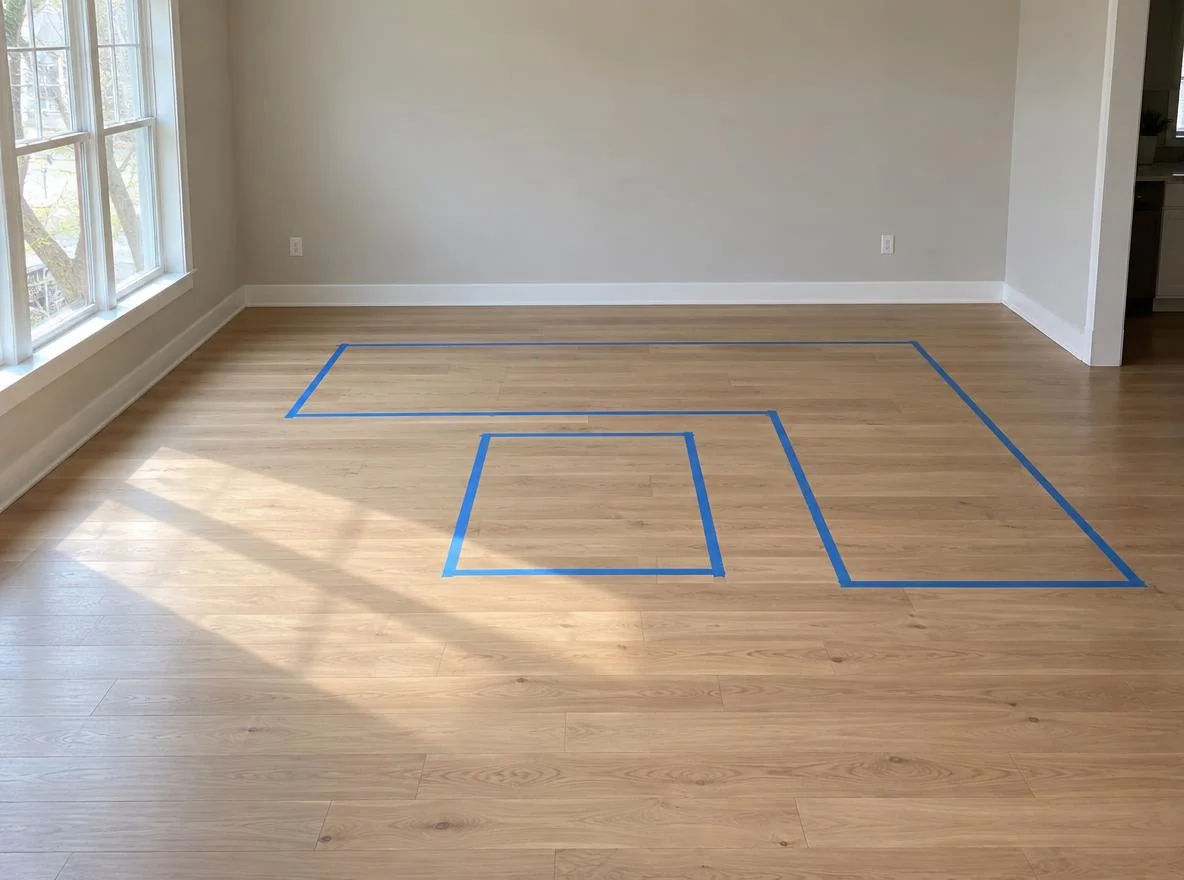
Mark the biggest pieces you are considering directly on the floor with painter's tape: a rough rectangle for the sofa, a square for the coffee table. Standing inside those outlines tells you more than any measurement alone.
Step 2: Anchor the room with your largest piece first
Choose and place your anchor before anything else. In most living rooms that is the sofa; in a media-focused room it might be the TV wall. Pick the longest uninterrupted wall or the natural focal point (a window with a view, a fireplace), and build outward from there. Why it matters: the anchor sets the scale for the whole room. Buy it first, get it right, and every smaller piece falls into place. Get it wrong and you spend months compensating with mismatched fillers.
Here are typical footprints to sanity-check against your tape outlines:
| Piece | Common size | Good for |
|---|---|---|
| Loveseat | 52–64 in wide | Small or narrow rooms |
| 3-seat sofa | 72–88 in wide | Most living rooms |
| Sectional | 95–120 in wide | Open-plan or large rooms |
| Coffee table | 36–48 in wide | Pair with a 3-seat sofa |
| Area rug | 8×10 or 9×12 ft | Front sofa legs on the rug |
Step 3: Plan the layout around clearances and walking paths
Now arrange the supporting pieces so the room actually functions. The goal is comfortable conversation distance and clear paths, not cramming in more furniture. Use these clearances as your rules of thumb:
| Gap | Target clearance |
|---|---|
| Sofa to coffee table | 14–18 in |
| Main walkway | 30–36 in |
| Coffee table to TV | at least 6–8 ft |
| Between seating pieces | 3.5–10 ft (conversation) |
Why it matters: a room can be beautifully furnished and still feel cramped if the walkways are tight. Clearances are what separate a livable room from a showroom that nobody wants to sit in. This is also the moment to test your plan visually. Instead of guessing, you can preview a fully furnished version of your empty room with AI from that single daylight photo, with the sofa, rug, and layout in place, so you can judge scale and flow before you commit to anything.
See Your Empty Room Fully Furnished in 30 Seconds
Upload one photo of your empty room and get a realistic furnished preview in the style you choose — before you buy a single piece of furniture.
Free to try • No design skills needed • Works with any room photo
Furnish My Room →Step 4: Layer in decor last
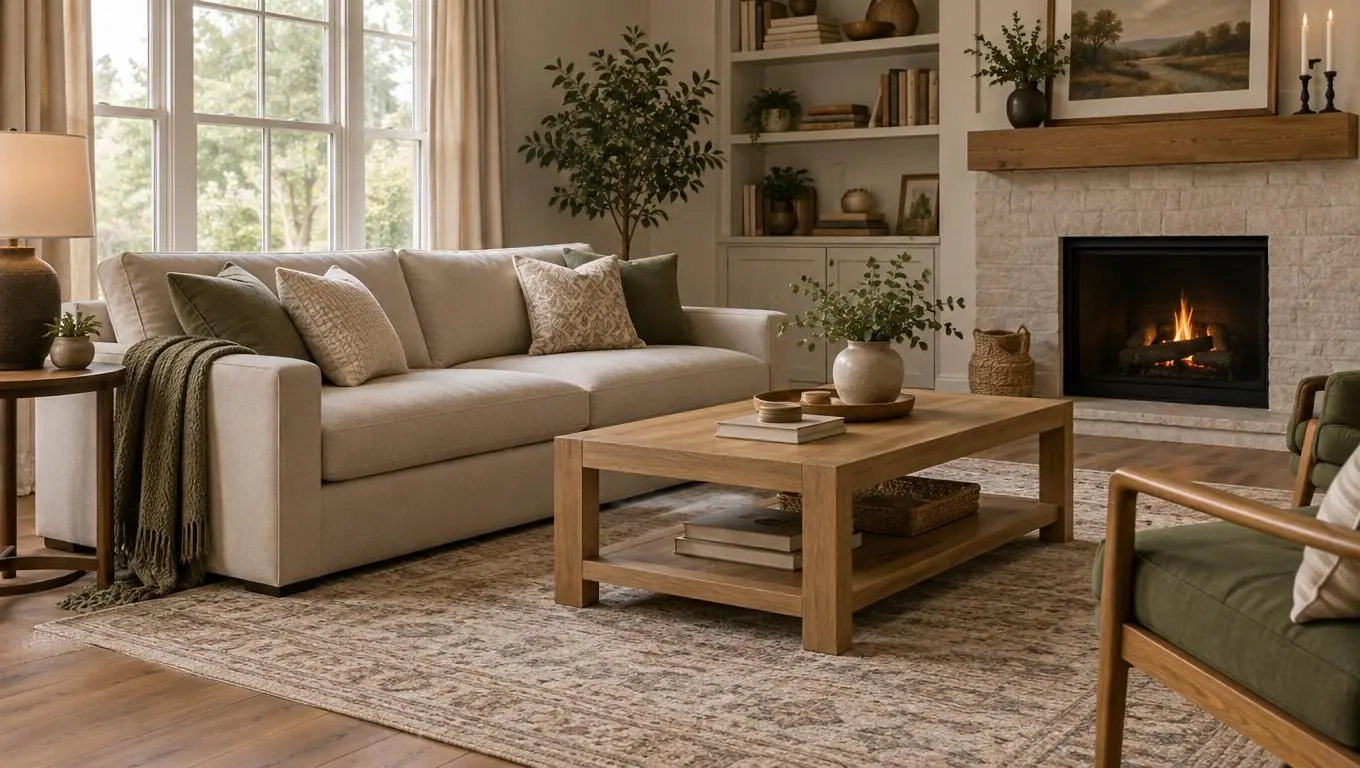
Only after the big pieces and layout are settled do you add the finishing layers: lamps and lighting, a rug that ties the seating together, cushions and throws, art at eye level, and a plant or two. Why it matters: decor is what makes a room feel like yours, but it is also the easiest place to overspend early. When you shop for accents before the anchors are chosen, you buy things that never quite match. Decor last means every accent supports a room that already works.
Start with one lamp for warmth, one rug to define the zone, and two or three cushions in a color you love. You can always add more; it is harder to unwind a room that is already cluttered.
Pro Tips for Best Results
A few habits make the difference between a room that looks thrown together and one that feels finished:
- Preview before you purchase. Testing furniture digitally in your own room photo is the single best way to avoid returns. Many big furniture retailers publish return windows and restocking fees, so a preview-first approach protects both your budget and your weekend. If you are new to the idea, this plain-English guide to virtual staging explains how photo-based previews work.
- Buy the anchor once, buy accents often. Spend your budget on the sofa and rug; save on cushions, art, and plants that you can swap seasonally.
- Respect the light. Note where daylight lands and place seating to enjoy it, not fight it. Layer in lamps for evenings so the room works around the clock.
- Give the room breathing space. An empty living room is a fresh start, whether it's a new home, a first apartment, or planning before the furniture arrives. Leave a little open floor; negative space reads as calm, not unfinished.
If you want a free way to experiment, this step-by-step guide to staging a room for free shows how to test layouts and styles without spending upfront.
Common Mistakes to Avoid
Most empty-room regrets trace back to a handful of missteps:
- Buying the sofa before measuring the doorway. If it cannot get through the door, the size on the listing is irrelevant.
- Pushing all furniture against the walls. This makes rooms feel like waiting areas. Float the seating slightly inward for warmth.
- Choosing a rug that is too small. A postage-stamp rug shrinks the whole room; get the front sofa legs onto it.
- Decorating first. Cushions and art before the anchor almost always means mismatched purchases.
- Skipping the preview. Ordering by imagination alone is how returns pile up. A quick digital test catches scale problems for free.
Troubleshooting: if the finished room still feels off, it is usually scale (piece too big or too small) or a missing layer (no lamp, no rug). Fix scale first, then add one warm layer at a time.
Final Thoughts
Decorating an empty living room gets far less intimidating when you follow the order that matters: measure, anchor the biggest piece, plan the layout around real clearances, and add decor last. That sequence keeps your budget on the pieces that count and prevents the costly furniture mistakes that come from guessing.
The smartest move you can make is to see the room furnished before you buy anything. Take one clear daylight photo of your empty living room, preview a furnished layout, and let the CTA below handle the next step. A room you love starts with a plan you can actually see.
See Your Empty Room Fully Furnished in 30 Seconds
Upload one photo of your empty room and get a realistic furnished preview in the style you choose — before you buy a single piece of furniture.
Free to try • No design skills needed • Works with any room photo
Furnish My Room →Frequently Asked Questions
What should I buy first for an empty living room?
Buy your anchor piece first, usually the sofa. It sets the scale for the whole room, so once it is chosen the coffee table, rug, and accents fall into place around it. Measure your doorways and walls before ordering so the anchor actually fits.
How do I decorate an empty living room on a budget?
Spend most of your budget on the sofa and rug, then save on cushions, art, and plants you can swap over time. Preview the layout digitally before buying to avoid returns and restocking fees, which is where budgets usually leak.
How do I plan a living room layout without a designer?
Start with your measurements, place your anchor against the main wall or focal point, and arrange seating using standard clearances: about 30–36 inches for walkways and 14–18 inches between the sofa and coffee table. Then test it on a photo of your room.
Can I see furniture in my room before I buy it?
Yes. With one daylight photo of your empty room, an AI room design tool can add realistic furniture and decor so you can judge scale, style, and flow before ordering. It only adds movable furnishings, a fast way to test ideas risk-free.
Where should the rug go in a living room?
Choose a rug large enough that at least the front legs of your sofa sit on it, commonly an 8×10 or 9×12 foot rug. A rug that is too small makes the seating feel disconnected and shrinks the whole room visually.