
Furnishing an Empty Apartment: Budget, Order, and Planning Guide
Introduction
To furnish an empty apartment without wasting money, buy in a room-by-room priority order — bed and seating first, then eating and storage, then decor last — and preview each layout before you spend. That single habit protects your budget from the two most expensive renter mistakes: buying a sofa that swallows the room, and buying pieces you never actually use.
This guide walks you through exactly how to furnish an empty apartment on a budget: what to buy first, how to split your money across rooms, the clearances that keep a small space livable, and a simple preview-first workflow so you commit to furniture with confidence. Whether it is your first apartment or a fresh start in a new city, you will leave with a clear plan instead of a cart full of guesses.
Key Takeaways
- Buy in order, not all at once. Prioritize sleep and seating, then eating and storage, and treat decor as the final layer.
- Split your budget by function. A rough 50/30/20 split across essentials, comfort, and finishing touches keeps you from overspending on one room.
- Measure before you shop. Walkways, doorways, and clearance around key pieces decide whether a room feels open or cramped.
- Preview before you buy. Seeing furniture in your actual room removes the guesswork and cuts costly returns.
- Empty rooms are an advantage. A blank apartment is the easiest starting point for planning a layout that fits your life.
What Does It Mean to Furnish an Empty Apartment the Smart Way?
Furnishing an empty apartment the smart way means treating it as a sequence of decisions rather than one giant shopping trip. Instead of filling every room at once, you start with the pieces you physically cannot live without, confirm they fit, then build outward as your budget allows.
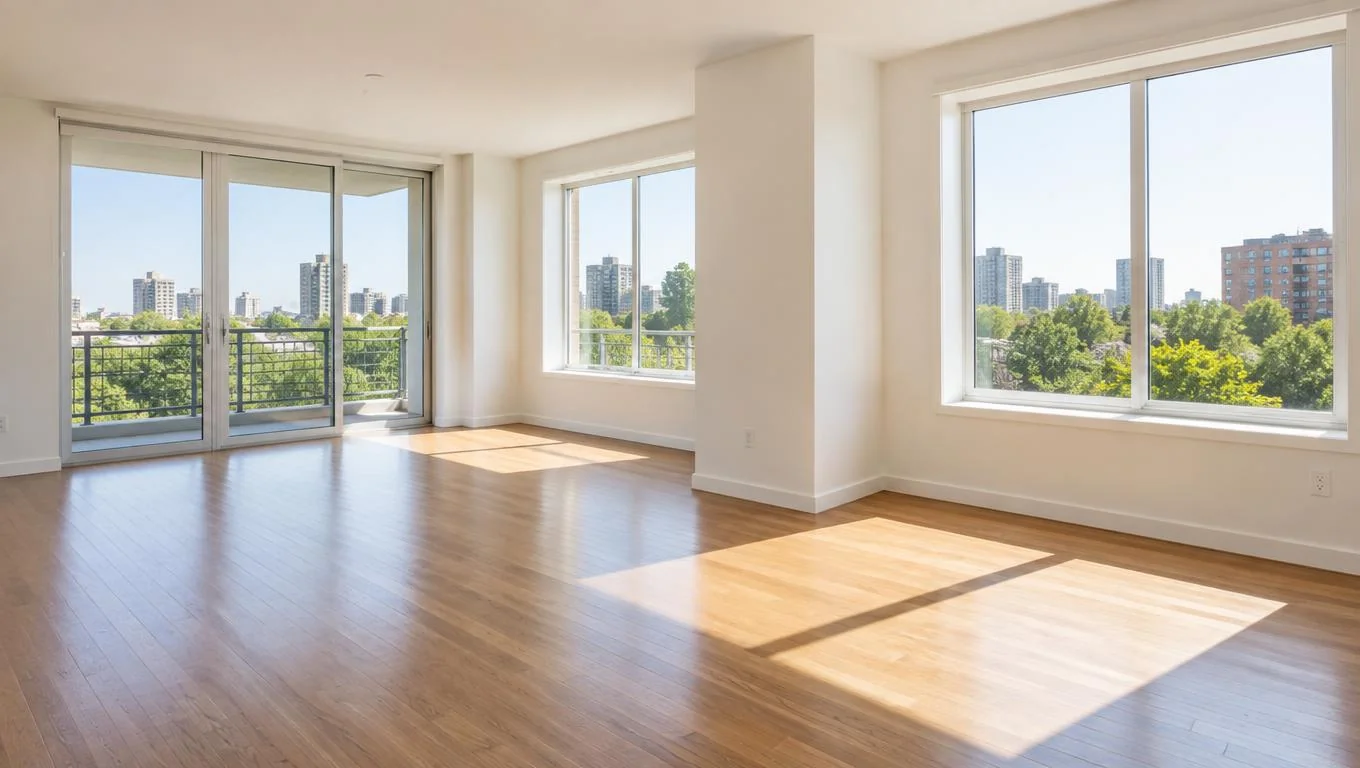
An empty apartment is actually the best possible starting point. There is no existing furniture forcing awkward compromises and no clashing pieces to work around, just open floor space and a chance to plan a layout that matches how you really live. That blank slate is perfect for a new home, a first apartment, or a fresh start before the furniture arrives.
The core skill is separating needs from wants. A bed, somewhere to sit, a surface to eat at, and basic storage make an apartment functional on day one. A matching accent chair, a rug in every room, and a gallery wall can wait. When you plan in that order, you avoid the trap of a beautiful living room and a mattress on the floor.
Smart furnishing also means thinking in terms of proportion. Renters often overspend on a single oversized piece, usually the sofa, that looks great online but leaves no room to walk. Planning the whole apartment first, even loosely, keeps every purchase in scale with the space you actually have.
Why Planning Before You Buy Matters
Furniture is expensive, heavy, and hard to return. A planning-first approach protects both your wallet and your sanity during an already stressful move.
The financial stakes are real. Returns are common with furniture, and shipping a sofa back is rarely free or easy. Many retailers charge restocking or return-shipping fees on large items, so a wrong guess can cost you well beyond the price tag. According to the National Retail Federation, returns remain a significant share of retail purchases, and bulky furniture is among the most painful categories to send back.
Beyond money, there is the livability factor. An apartment furnished in the wrong order feels off. You notice the missing dresser every morning and the empty dining corner every night. Buying in priority order means each purchase immediately makes your daily life better, so the apartment feels more complete at every stage, not just at the finish line.
Planning also reduces decision fatigue. When you already know the sofa goes on the long wall and the bed faces the window, individual shopping choices get faster and cheaper. You stop browsing endlessly and start buying with a clear target.
How to Get Started: The Room-by-Room Priority Order
Start by ranking your rooms by how much you use them, then buy the anchor piece for each before you add anything else. Here is a priority order that works for most renters moving into an unfurnished apartment.
Step 1: The bedroom (sleep first)
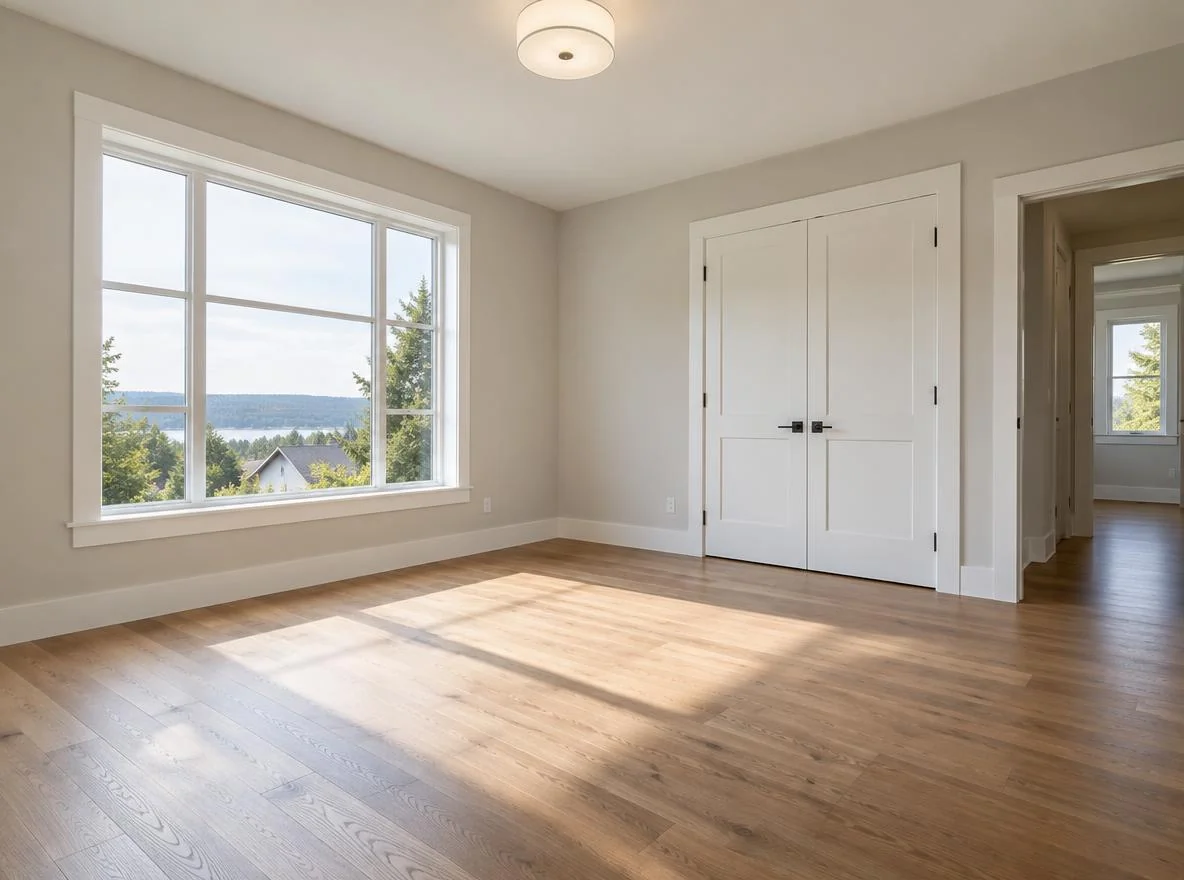
You need quality sleep from night one, so the bedroom leads. Buy a bed frame and mattress first, then a single nightstand and a way to store clothes, a dresser or a clothing rack if closet space is tight. Everything else in the bedroom is optional at the start.
Step 2: The living room (a place to sit)
Next comes seating. A sofa or loveseat plus one surface (a coffee table or a side table) turns an empty room into a place you can relax and host. Resist the urge to buy a full sectional before you confirm it fits. This is where measuring pays off most.
Step 3: Eating and working surfaces
A small dining table, or even a compact table that doubles as a desk, covers meals and remote work. Two chairs are enough to start; you can add more later.
Step 4: Storage and organization
Shelving, a shoe rack, and a few bins keep the apartment from descending into clutter. Storage is easy to postpone but quickly becomes the difference between calm and chaos.
Step 5: Decor and finishing touches
Rugs, lamps, art, and plants come last. They make a space feel like yours, but they add nothing to daily function, so they belong at the end of the queue. They are also the easiest place to save.
Here is a simple summary you can shop against:
| Priority | Room / Zone | Anchor Purchase | Can Wait |
|---|---|---|---|
| 1 | Bedroom | Bed + mattress | Headboard, second nightstand |
| 2 | Living room | Sofa + one table | Accent chair, media console |
| 3 | Dining / work | Table + 2 chairs | Extra seating, bar stools |
| 4 | Whole apartment | Basic storage | Decorative baskets |
| 5 | All rooms | Nothing essential | Rugs, art, lamps, plants |
If you want a deeper walkthrough of styling that first main room once the essentials land, our guide on how to decorate an empty living room from scratch picks up right where this list leaves off.
See Your Empty Room Fully Furnished in 30 Seconds
Upload one photo of your empty room and get a realistic furnished preview in the style you choose — before you buy a single piece of furniture.
Free to try • No design skills needed • Works with any room photo
Furnish My Room →How to Split Your Budget
A simple way to divide apartment furniture planning is a 50/30/20 rule: roughly half of your budget to essentials, a third to comfort and function, and the rest to finishing touches. This keeps you from pouring everything into one showpiece and running out before the bedroom is done.
| Budget Share | Category | What It Covers |
|---|---|---|
| ~50% | Essentials | Bed, mattress, sofa, dining table |
| ~30% | Comfort & function | Storage, seating, lighting basics, kitchen items |
| ~20% | Finishing touches | Rugs, art, plants, decorative accents |
Prices vary widely by city and retailer, so treat these as ratios, not fixed dollar amounts. The point is discipline: decide the split before you shop, and check each purchase against the category it belongs to. Most renters find that mixing new essentials with secondhand comfort pieces stretches a tight budget the furthest.
Best Practices for Furnishing an Empty Apartment
Once you know the order and the budget, a few habits make the whole process smoother and cheaper.
Measure everything twice. Note room dimensions, doorway widths, and hallway turns before you buy anything large. A sofa that fits the room but not the entryway is a return waiting to happen. Keep these clearances in mind for a comfortable small apartment:
| Zone | Recommended Clearance |
|---|---|
| Main walkway | 30–36 in (76–91 cm) |
| Sofa to coffee table | 14–18 in (36–46 cm) |
| Around a dining table (to pull chairs) | 36 in (91 cm) |
| Bed to wall or dresser | 24–30 in (61–76 cm) |
Choose pieces that do double duty. A storage ottoman, a bed with drawers, or a drop-leaf table earns its floor space twice over, ideal for a small rental.
Stick to a loose palette. Pick two or three neutral base colors so mismatched thrift finds still read as intentional. You can add personality with cheap, swappable decor later.
Preview before you commit. The single best habit is seeing furniture in your actual room before you order. A quick furnished preview shows whether the scale, color, and layout work in your space, so you buy once instead of returning twice.
Buy essentials new, accents secondhand. Mattresses and sofas you use daily are worth investing in; side tables, shelving, and decor are easy wins on marketplace listings.
A Preview-Before-You-Buy Workflow
Here is a repeatable workflow that keeps every purchase low-risk:
- Take one clear daylight photo of the empty room, shot straight-on from the doorway so the whole space is visible.
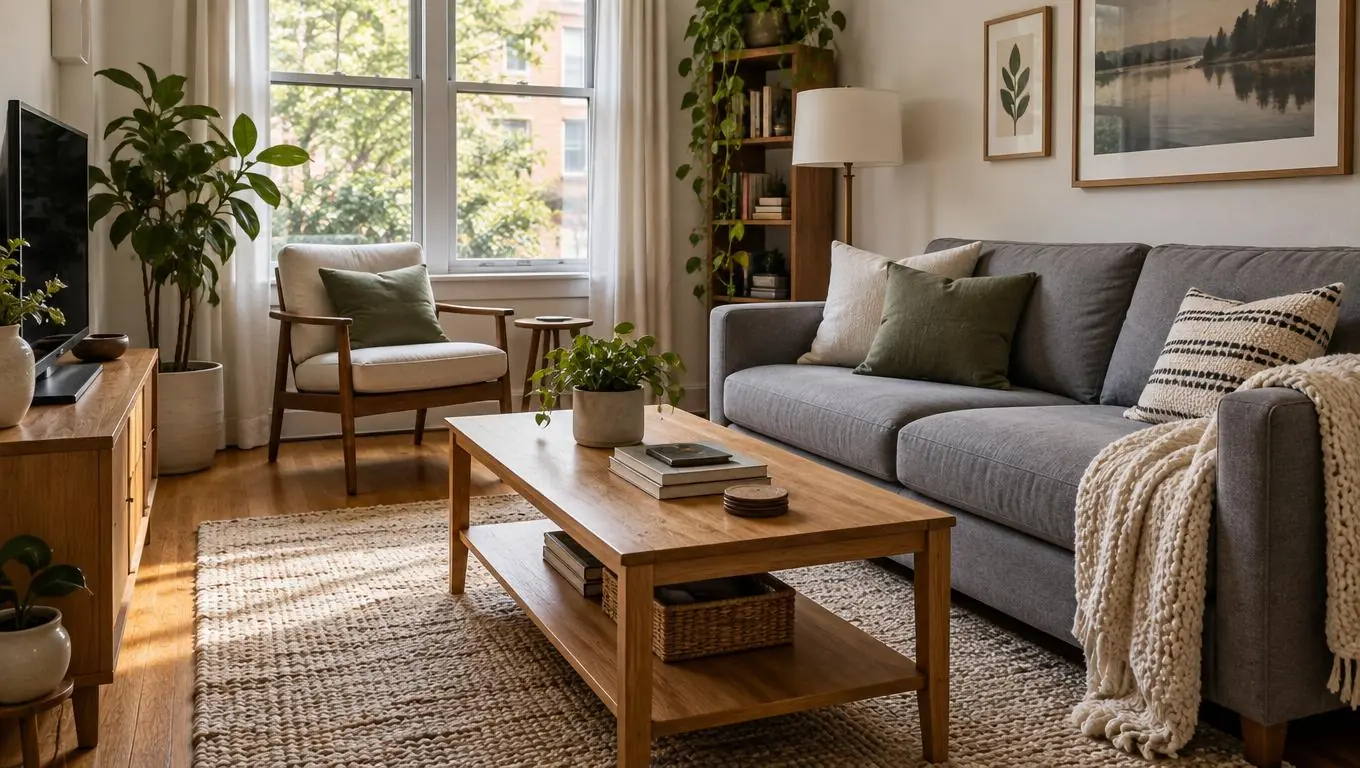
- Generate a furnished preview of the room in the style and layout you are considering, so you can see the sofa, bed, or table in place before ordering.
- Compare two or three options — a bigger sofa versus a loveseat, the bed on one wall versus another — and judge which keeps the walkways open.
- Shortlist real products that match the preview you liked, checking dimensions against your measurements.
- Buy the anchor piece, then repeat for the next room in your priority order.
This is exactly the kind of empty-room planning InteriorStage was built for. You can preview furniture in your empty apartment from a single photo, test different layouts in seconds, and only spend once you have seen the result you want. If you have never tried this kind of tool, our explainer on how a room visualizer works covers what to expect.
Common Mistakes to Avoid
A few predictable errors cost renters the most money and stress:
- Buying the sofa first, everything else later. The sofa feels exciting, but sleeping on a mattress on the floor for a month is not. Follow the priority order.
- Ignoring scale. Furniture that looks perfect in a large showroom often overwhelms a rental. Always check pieces against your measured clearances.
- Filling every corner at once. An apartment does not need to be complete in week one. Leaving space lets you add the right pieces instead of the fastest ones.
- Forgetting the doorway test. Measure your entry, elevator, and stairwell before ordering anything large.
- Skipping the preview. Ordering blind is how returns pile up. Seeing the layout first turns guesses into decisions.
Final Thoughts
The confident way to furnish an empty apartment is to buy in order, split your budget by function, and preview each layout before you spend. Start with sleep and seating, add eating and storage, and save decor for last. Measure everything so each piece fits both the room and the doorway.
Your empty apartment is a clean slate that makes apartment furniture planning easier than any furnished space. Take one clear daylight photo of a room, preview a furnished layout you love, and let the tool below handle the next step so you can commit to furniture without the fear of an expensive mistake.
Frequently Asked Questions
What furniture should I buy first for an empty apartment?
Start with a bed and mattress, then a sofa and one table. These cover sleep and seating, the two things you use most from day one. Add a dining table, storage, and decor afterward in that order.
How much does it cost to furnish an empty apartment?
Costs vary widely by city, size, and whether you buy new or secondhand, so plan by ratios rather than a fixed number. A helpful approach is to devote the largest share of your budget to essentials, a smaller share to comfort and function, and the least to finishing touches.
How can I furnish an apartment on a tight budget?
Buy essentials like the mattress and sofa new, then source side tables, shelving, and decor secondhand. Choose double-duty pieces such as storage ottomans, and preview layouts before buying so you avoid costly returns.
How do I know if furniture will fit before I buy it?
Measure your room, doorways, and walkways first, then compare those numbers to product dimensions. Previewing the piece in a photo of your actual room helps you confirm both fit and scale before you order.
Is it better to furnish an apartment all at once or gradually?
Gradually, in priority order, is usually smarter for renters. Buying room by room spreads out the cost, lets you learn how you use the space, and helps you choose pieces that truly fit instead of rushing every decision.