
First Apartment Furniture Checklist: What You Actually Need
Introduction
Your first apartment furniture checklist really only needs about a dozen must-have pieces to start: a bed and mattress, a sofa or seating, a dining or work table with chairs, storage for clothes, and a few kitchen and bathroom basics. Everything else is nice-to-have and can wait until you know how you actually live in the space.
If you are staring at an empty room from zero, this guide breaks the first apartment checklist down by room, splits every item into must-have and nice-to-have tiers, and flags the overbuying mistakes that drain a new renter's budget. The goal is simple: buy fewer, better pieces that fit, and preview them in your space before you spend.
Key Takeaways
- Buy in two tiers. Cover must-have items first (bed, seating, table, storage), then add nice-to-have pieces once you know your routine.
- Go room by room. A per-room apartment essentials list keeps you from double-buying and forgetting the basics.
- Measure before you order. The most expensive first apartment furniture mistake is a sofa or bed that will not fit or blocks a walkway.
- Preview before you buy. Seeing furniture in your actual room prevents scale and layout regrets.
- Wait on the extras. Guest seating, bar carts, and decorative pieces can come after month one.
What Is a First Apartment Furniture Checklist?
A first apartment furniture checklist is a prioritized shopping plan that tells you what to furnish first, room by room, when you are starting with an empty or half-empty space. Instead of wandering a furniture store and buying whatever catches your eye, you work from a list built around function: where you sleep, where you sit, where you eat, and where you store things.
The most useful checklists separate items into two tiers. Must-haves are the pieces you need to live comfortably from day one. Nice-to-haves are upgrades and comforts that improve the space but are not urgent. This tiering matters because a first apartment budget is almost always tighter than the wish list.
Here is the core apartment essentials list at a glance:
| Room | Must-Have | Nice-to-Have |
|---|---|---|
| Bedroom | Bed frame, mattress, bedding, dresser or clothing storage | Nightstand, bench, full-length mirror, reading lamp |
| Living room | Sofa or loveseat, coffee or side table, floor lamp | Accent chair, TV stand, rug, bookshelf |
| Dining / work | Small table, two chairs | Bar stools, extra chairs, sideboard |
| Kitchen | Cookware, plates, glasses, utensils, trash bin | Small appliances, serveware, bar cart |
| Bathroom | Towels, shower curtain, bath mat, storage caddy | Over-toilet shelf, hamper, decor |
Notice how short the must-have column is. That is intentional. A functional first apartment does not need to be full. It needs the right pieces in the right places.
Why a First Apartment Checklist Matters
Furnishing from zero is emotional and expensive at the same time, which is exactly when impulse buying happens. Without a plan, most first-time renters overspend in month one on things they do not need yet and then run short on the basics.
A checklist protects your budget and your space in three ways. First, it forces you to sequence purchases so rent, deposit, and moving costs come before decorative extras. Second, it keeps you from buying furniture that is too big for a rental-sized room, a common and costly error. Third, it gives you a clear stopping point, so you are not endlessly "finishing" a room that is already livable.
There is also a return-and-hassle cost to guessing wrong. Large furniture is heavy, awkward to return, and sometimes non-returnable once assembled. A little planning up front saves you the pain of hauling a too-big couch back down three flights of stairs. For a fuller look at sequencing and budget, see our guide to furnishing an empty apartment.
How to Get Started: Your Room-by-Room Plan
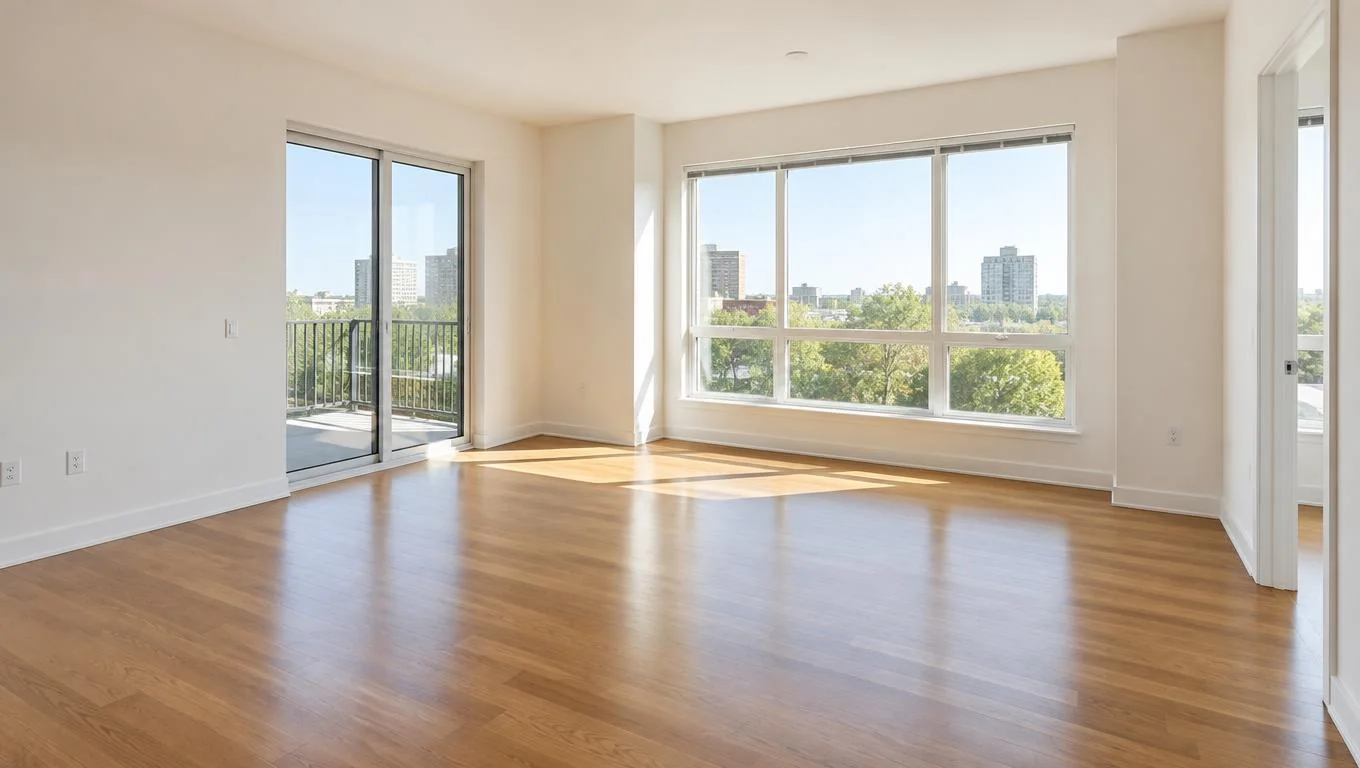
Start by walking through your empty apartment with your phone and a tape measure. Photograph each room from the doorway, note the wall lengths, and mark where windows, outlets, radiators, and doors are. These constraints decide what fits, not the other way around.
Then work through the rooms in this order, because it matches how quickly you will need each space.
1. Bedroom first
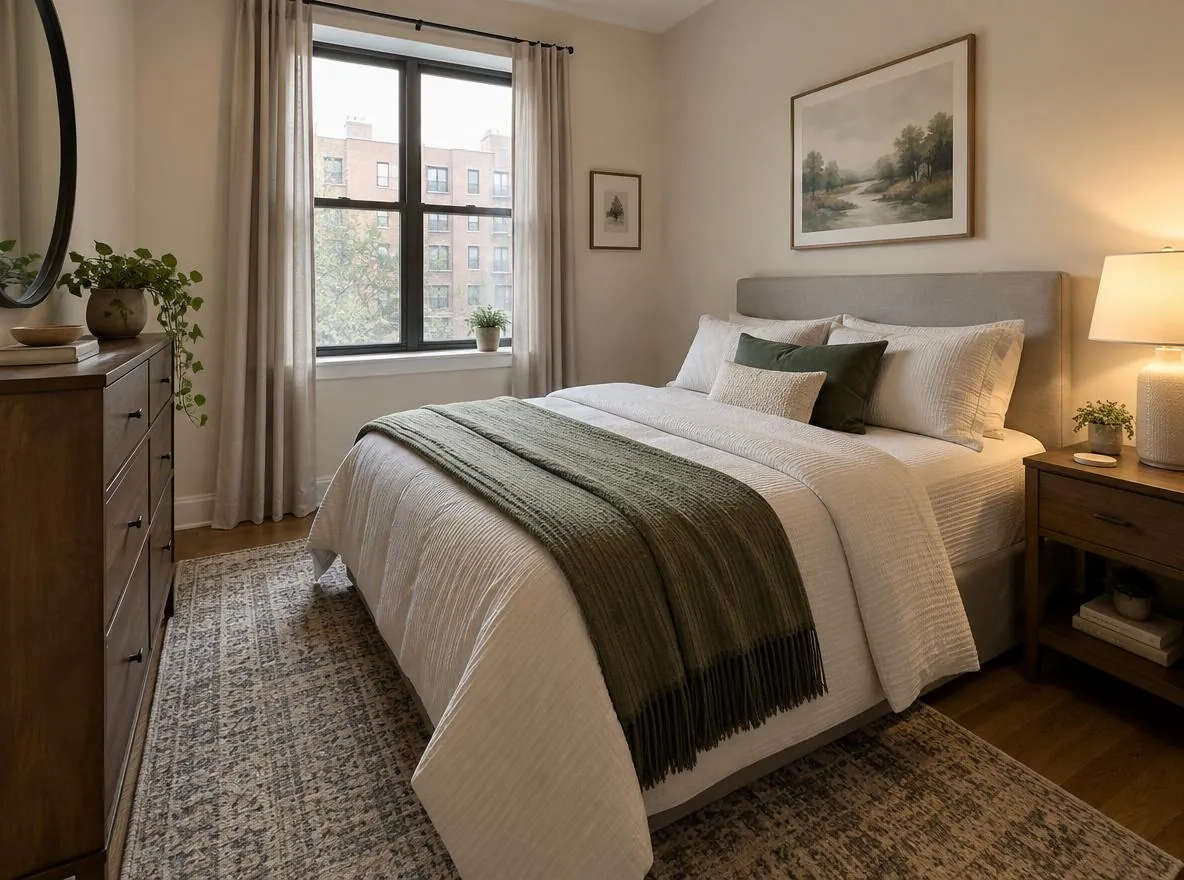
You need to sleep the first night, so the bed comes first. Choose a mattress size that leaves at least 24 inches of walking space on the sides you use. Add clothing storage, a dresser or even a sturdy rack, before anything decorative. A nightstand and lamp make the room comfortable but can wait a week.
2. Living room second
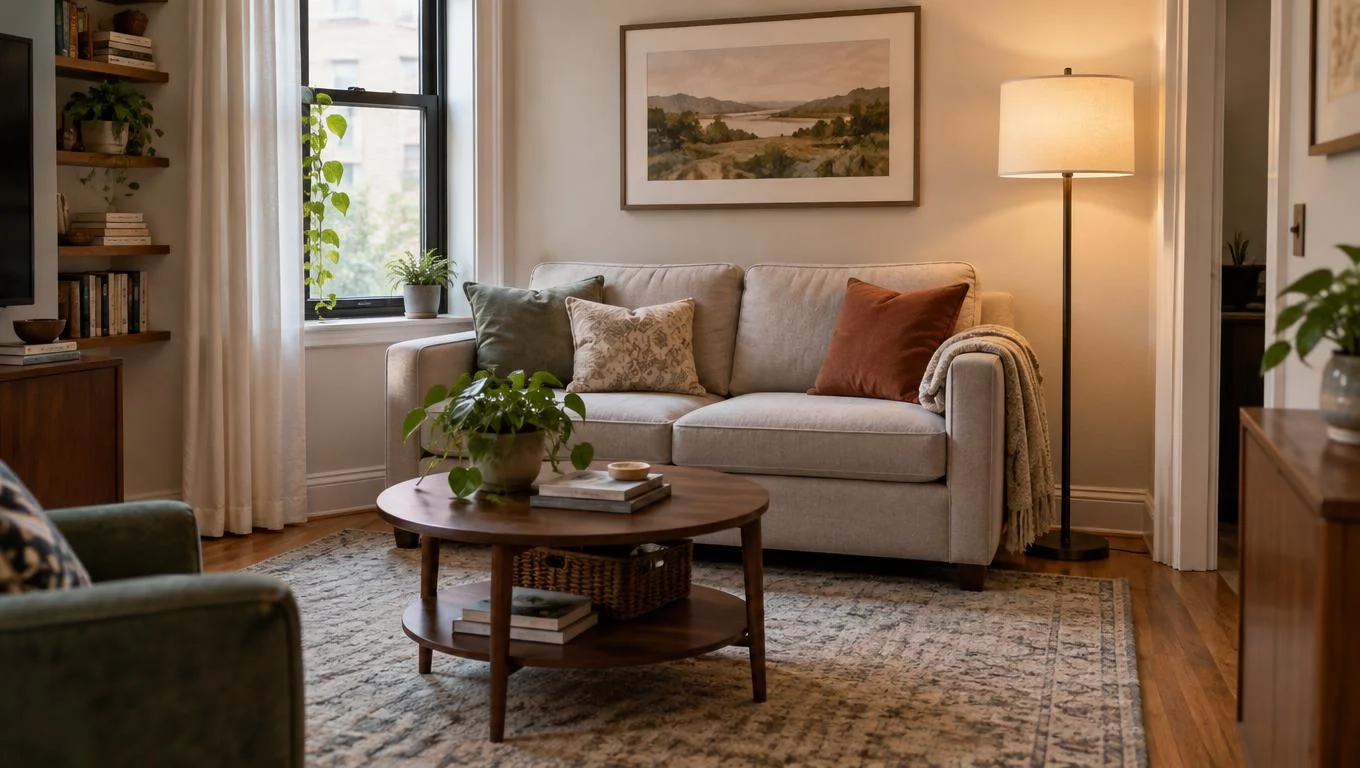
Pick one primary seating piece sized to the wall, not to the whole store showroom. In a small living room, a loveseat or apartment sofa (roughly 58–72 inches wide) usually beats a full three-seater. Add a coffee or side table and one light source, and the room is already usable.
Before you commit to a sofa, this is the moment to preview it. Instead of guessing, upload a photo of your empty room and use a room visualizer to see furniture placed in your actual space at realistic scale. Seeing the sofa against your real wall and windows tells you instantly whether it crowds the walkway or fits just right.
3. Dining or work area third
A small table with two chairs covers meals and remote work. Skip the six-seat dining set for now. Most first apartments do not have room, and you rarely host that many people in month one.
4. Kitchen and bathroom last
These need supplies more than furniture. Stock cookware, a set of plates and glasses, utensils, a trash bin, towels, a shower curtain, and a bath mat. Small appliances and organizers are nice-to-have upgrades you can add over time.
See Your Empty Room Fully Furnished in 30 Seconds
Upload one photo of your empty room and get a realistic furnished preview in the style you choose — before you buy a single piece of furniture.
Free to try • No design skills needed • Works with any room photo
Furnish My Room →Best Practices for Buying First Apartment Furniture
Once you know what to buy, a few habits keep your money and your space in good shape.
Measure twice, order once. Write down the width, depth, and height of every large piece before you buy, and check it against your wall lengths and door widths. A sofa that will not clear a stairwell or doorway is a surprisingly common problem.
Leave room to walk. Use these clearance rules so a furnished room still feels open, not stuffed:
| Walkway or gap | Comfortable clearance |
|---|---|
| Main walking path | 30–36 inches |
| Sofa to coffee table | 14–18 inches |
| Around a dining table | 36 inches to pull out chairs |
| Beside a bed (used side) | 24–30 inches |
Buy multi-use pieces. A storage ottoman, a bed with drawers, or a drop-leaf table earns its floor space twice over in a small apartment.
Preview before you commit. Trying furniture in your real room first is the single best way to avoid scale mistakes. If you want to understand how these previews work, our explainer on how a room visualizer works walks through the process. Seeing a layout before buying is far cheaper than returning it.
Mix new and secondhand. Spend on the pieces you touch daily, like your mattress and seating, and save on side tables, shelving, and decor by buying used or flat-pack.
Common Mistakes to Avoid
Most first apartment furniture regrets fall into a handful of predictable traps. Knowing them ahead of time saves real money.
- Buying everything at once. Furnishing the entire apartment in one weekend leads to mismatched impulse buys and a maxed-out budget. Furnish the rooms you use most first, then fill in.
- Oversizing the sofa. A showroom sofa looks smaller than it will in your room. Too-big seating blocks walkways and swallows a small living room.
- Skipping measurements. Ordering without measuring the room, doorways, and elevator leads to returns and stress.
- Overbuying decor early. Rugs, art, and accent pieces are tempting, but they are nice-to-haves. Live in the space a few weeks before you style it.
- Ignoring storage. New renters often forget clothing and kitchen storage, then end up with piles on the floor. Storage is a must-have, not an afterthought.
Final Thoughts
Furnishing your first apartment goes smoothly when you work from a clear first apartment checklist instead of shopping on impulse. Cover the must-haves room by room, the bed, seating, a table, and storage, and hold off on the nice-to-haves. You get a livable home without draining your budget or filling every corner.
The pieces that matter most are the big, expensive ones, and those are exactly the ones worth previewing first. Take one clear daylight photo of your empty room, see a furnished layout at real scale before you order, and let the CTA below handle the next step. A little planning now means a first apartment furniture setup you actually love, and no costly returns.
See Your Empty Room Fully Furnished in 30 Seconds
Upload one photo of your empty room and get a realistic furnished preview in the style you choose — before you buy a single piece of furniture.
Free to try • No design skills needed • Works with any room photo
Furnish My Room →Frequently Asked Questions
What furniture do I really need for my first apartment?
The true must-haves are a bed and mattress, one seating piece like a sofa or loveseat, a small table with chairs, and clothing and kitchen storage. Add towels, a shower curtain, and basic cookware. Everything else, from accent chairs to rugs to decor, is nice-to-have and can wait.
How much does it cost to furnish a first apartment?
Costs vary widely by city and whether you buy new or secondhand, so treat any figure as a rough range. Most first-time renters find they can cover the must-have tier affordably by mixing a new mattress and seating with used side tables and flat-pack storage, then adding extras over time.
What should I buy first for a new apartment?
Start with the bedroom so you can sleep comfortably the first night, then the living room seating, then a small dining or work table. Kitchen and bathroom supplies come next. This order matches how quickly you will use each space.
How do I avoid buying furniture that is too big?
Measure your wall lengths, doorways, and walking paths before you shop, and compare them to each piece's dimensions. Better yet, preview the furniture in a photo of your actual room first so you can see the scale and clearance before you order.
Should I buy everything before I move in?
No. Buy the must-have pieces for the rooms you use most, then live in the space for a few weeks before adding nice-to-haves. This prevents impulse buys, mismatched pieces, and an overstuffed apartment.