
Furnishing a New Home Checklist: Room-by-Room Priorities for the First 90 Days
Introduction
You just closed on the house, got the keys, and now you are standing in several empty rooms at once. The fastest way to avoid expensive mistakes is a furnishing a new home checklist that phases your buying over the first 90 days: week 1 is pure survival essentials, month 1 is the big anchor pieces (seating, bed, dining table), and month 3 is rugs, art, and secondary furniture once you actually know how you live in the space.
This is not a first-apartment list. A whole house has more square footage, more rooms to prioritize, longer delivery lead times on big items, and a different budget shape because you own the place. This guide walks you through how to furnish a new house room by room, when to order long-lead pieces, and how to preview each room furnished before you spend, so you buy the right size the first time.
Key Takeaways
- Phase it, don't panic-buy. Week 1 covers sleep, sit, and eat. Month 1 adds the anchor furniture. Month 3 is finishing touches.
- Order long-lead items early. Sofas and upholstered beds can take 8–16 weeks, so decide on those first even if they arrive last.
- Prioritize the rooms you live in daily (primary bedroom, main living area, and kitchen/dining) before guest rooms and bonus spaces.
- Measure and preview before ordering. A sofa that looks great online can swallow a small living room or float in a large one.
- A new house differs from a first apartment in budget, square footage, and ownership, which changes what you buy and in what order.
What a Furnishing a New Home Checklist Actually Covers
A furnishing a new home checklist is a phased plan that tells you what to buy for each room and in what order, so an empty house becomes livable without draining your savings or filling rooms with pieces that don't fit. It covers three things at once: priority (which rooms matter most), timing (what has to arrive first), and sizing (what actually fits each space).
Think of it in three waves. The first wave is non-negotiable function: somewhere to sleep, somewhere to sit, a surface to eat on, and enough lighting and storage to live. The second wave is the anchor furniture that defines each room: the main sofa, the primary bed, the dining table. The third wave is everything that makes the house feel finished, like rugs, artwork, lamps, side tables, and the secondary bedrooms or home office.
Here is the quick version of the 90-day structure:
| Phase | Timeframe | Focus | Example purchases |
|---|---|---|---|
| Wave 1 | Week 1 | Survival essentials | Bed + mattress, basic seating, folding or budget dining table, lamps, shower curtain, trash bins |
| Wave 2 | Month 1 | Anchor pieces | Main sofa, real dining set, primary bedroom furniture, key storage |
| Wave 3 | Month 3 | Finishing + secondary rooms | Rugs, art, side tables, guest room, office, outdoor seating |
Why Phasing Your Purchases Matters
When you furnish several empty rooms at once, the pressure to "just fill them" is intense. That pressure is exactly what leads to regret buys: the oversized sectional that blocks a walkway, the trendy dining set you don't actually like after a month, the guest room furniture you bought before the primary bedroom was done.
Phasing solves three real problems. First, it protects your budget right after a big down payment and closing costs, when cash is tight. Second, it accounts for lead times. Many upholstered sofas and custom beds ship in 8 to 16 weeks, so the smart move is deciding on those early even though they land in Wave 2 or later. Third, it lets you learn the house before committing. You discover where light falls, how you move between rooms, and which corner actually becomes the reading nook.
Returning large furniture is also costly and inconvenient. Many retailers charge restocking and return shipping fees on big items, and plenty of oversized pieces simply can't be returned at all, so getting size and fit right before you order saves far more than a few dollars.
How to Get Started: Room by Room
Start by ranking your rooms by how much you use them. For most new homeowners the order is: primary bedroom, main living room, kitchen/dining, bathrooms, then secondary bedrooms, office, and bonus rooms. Furnish from most-used to least-used, and apply the three waves within each room.
Week 1: The essentials that make the house livable
This wave is about function, not style. You need to sleep, sit, eat, and stay organized while the real furniture is on order.
- Bedroom: a quality mattress and a simple bed frame (or the mattress on a foundation), one nightstand, a lamp, and blackout curtains.
- Living room: temporary seating, even a couple of accent chairs or a loveseat you already own, plus a floor lamp.
- Kitchen/dining: a small table and chairs (a budget or folding set is fine), basic cookware, and a trash/recycling setup.
- Whole house: shower curtains, bath mats, a few lamps, extension cords, and window coverings for privacy.
Month 1: The anchor pieces

Now you commit to the furniture that defines each room. Because the main sofa, primary bed, and dining table carry long lead times, this is where you should have already placed orders in week 1 even if they arrive later in the month.
- Main sofa or sectional sized to the living room. Measure the wall and the path to the room before you order.
- Primary bedroom set: real bed frame, dresser, and matching nightstands.
- Dining table and chairs that seat your household plus a couple of guests.
- Key storage: a media console, entry storage, or a bookcase to get boxes unpacked.
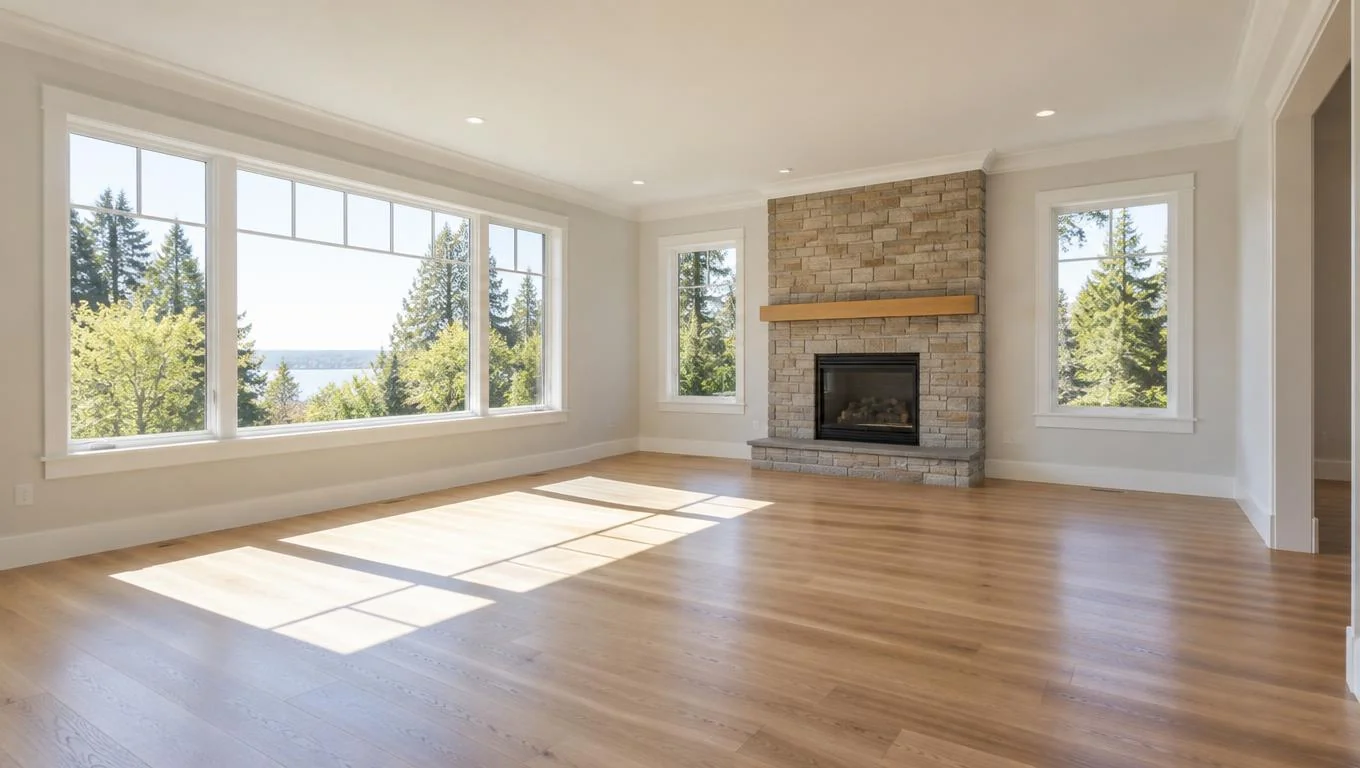
Before you commit to any anchor piece, it helps to preview each empty room fully furnished from a single photo so you can test a sofa size, a bed placement, or a dining layout against the actual space instead of guessing from a product page. Seeing the room furnished first is the single best defense against a costly size mistake.
Month 3: Finishing touches and secondary rooms
By now you know the house. This is when you add the pieces that make it feel like home and furnish the rooms you don't use every day.
- Soft layer: rugs sized correctly for each room, throw pillows, curtains you actually love.
- Wall and light: artwork, mirrors, table and floor lamps for layered lighting.
- Secondary spaces: guest bedroom, home office desk and chair, and any outdoor or bonus-room seating.
See Your Empty Room Fully Furnished in 30 Seconds
Upload one photo of your empty room and get a realistic furnished preview in the style you choose — before you buy a single piece of furniture.
Free to try • No design skills needed • Works with any room photo
Furnish My Room →Best Practices for Furnishing a Whole House
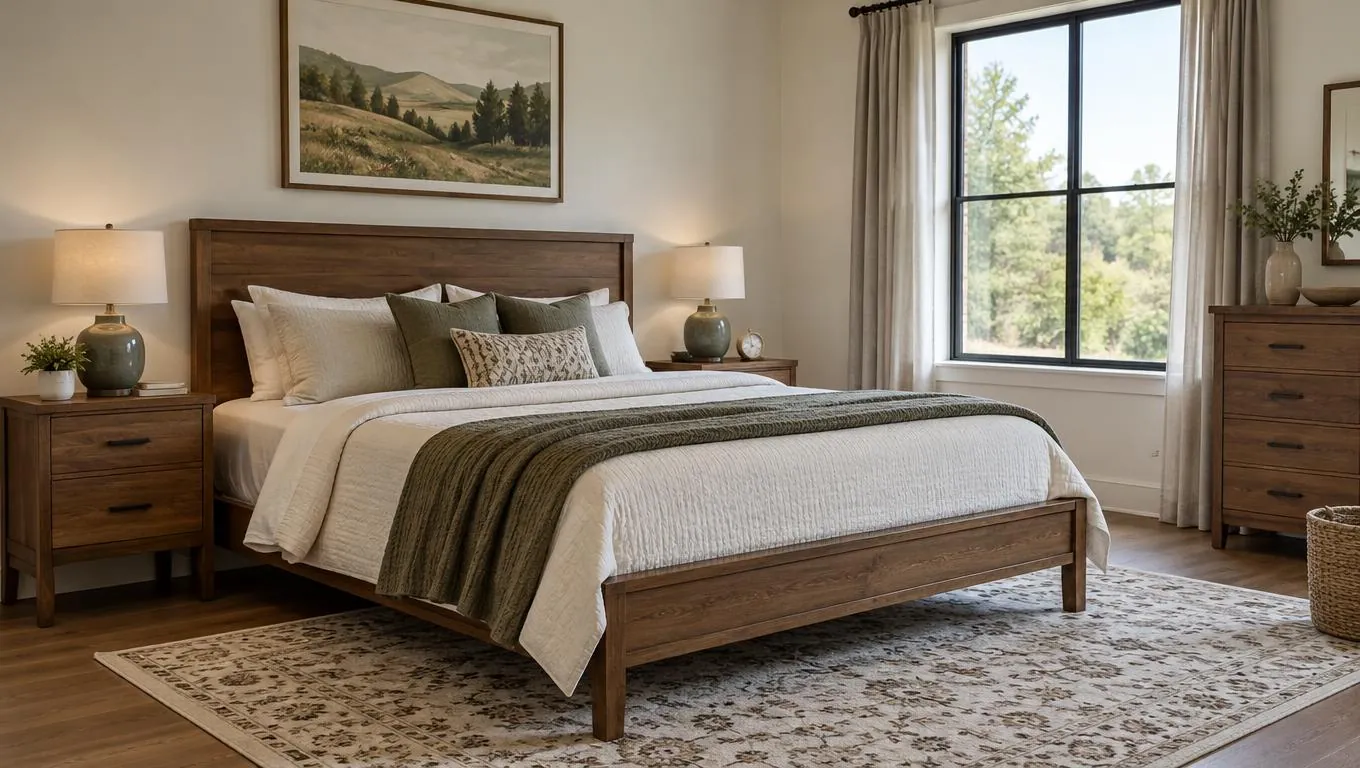
A new house is different from a first apartment, and the differences change your strategy. The table below sums up why the same checklist doesn't apply to both. If you are coming from a rental mindset, our first apartment furniture checklist covers the smaller, budget-first version of this plan.
| Factor | First apartment | New house |
|---|---|---|
| Square footage | One or two rooms | Multiple rooms, often all empty at once |
| Budget shape | Spread evenly, fast | Tight after closing, then phased over months |
| Ownership | Temporary, buy to move easily | Long-term, invest in pieces that last |
| Lead times | Mostly in-stock, ready to assemble | Custom sofas/beds can take 8–16 weeks |
A few rules that save money and regret:
- Measure three things for every big piece: the spot it goes, the doorways and stairs it must pass through, and the clearance around it (aim for at least 30–36 inches of walkway).
- Buy anchor pieces first, decor last. Pillows and art are easy to swap; a wrong-size sofa is not.
- Order long-lead items in week 1 even though they land later. The decision comes early, the delivery comes late.
- Preview before you order. Testing a layout on a photo of your actual room beats imagining it from a catalog shot every time.
- Invest where it counts: mattress, sofa, and dining chairs get daily use, so spend there and save on trend pieces.
Common Mistakes to Avoid
Even with a plan, a few mistakes show up again and again when people furnish a new house.
- Buying everything in the first week. You haven't lived in the house yet. Give the space time before locking in secondary rooms.
- Ignoring lead times. Falling in love with a custom sofa in month 2 can mean an empty living room until month 4 or 5.
- Getting the scale wrong. Furniture that fit a former apartment often looks tiny in a larger house, or a big-box sectional overwhelms a modest room.
- Furnishing guest rooms before daily rooms. Your primary bedroom and main living area earn the first dollars.
- Skipping the rug-size step. An undersized rug makes a whole room feel unfinished; front legs of seating should sit on the rug.
- Not previewing the layout. Returning a wrong-size anchor piece costs time, restocking fees, and sometimes the full price on no-return items.
Test Your Furniture Layout Before You Order
Upload a photo of any empty room and preview sofas, beds, and dining sets at realistic scale — so you order the right size the first time.
Free to try • No design skills needed • Works with any room photo
Furnish My Room →Final Thoughts
Furnishing a new home works best when you phase the purchases and preview each room before you spend. With a clear furnishing a new home checklist (week 1 essentials, month 1 anchor pieces, month 3 finishing touches) you fill several empty rooms at a pace your budget and delivery schedules can actually handle. Prioritize the rooms you use daily, decide on long-lead items early, and measure every big piece against the real space.
The simplest way to avoid a costly size mistake is to see the room furnished first. Take one clear daylight photo of each empty room, preview a layout and a few furniture sizes against it, and let the CTA below handle the next step. A little planning now turns an overwhelming empty house into a home you love, one confident purchase at a time.
Furnish Every Empty Room with Confidence
Preview each room of your new home fully furnished from a single photo — essentials, anchor pieces, and finishing touches, all before you buy.
Free to try • No design skills needed • Works with any room photo
Furnish My Room →Frequently Asked Questions
What should I buy first when furnishing a new house?
Start with survival essentials in week 1: a mattress and bed frame, basic seating, a simple dining table, and enough lighting and window coverings to live comfortably. Save the main sofa, primary bedroom set, and real dining table for month 1 as your anchor pieces, and decor for month 3.
How long does it take to furnish a whole house?
A realistic timeline is about 90 days if you phase it. The house becomes livable in week 1, feels established by the end of month 1 once anchor furniture arrives, and feels finished by month 3 once rugs, art, and secondary rooms are done. Long lead times on custom pieces can stretch this, which is why you decide on those early.
Why order sofas and beds before they're needed?
Upholstered sofas and custom beds often ship in 8 to 16 weeks. If you wait to order them until you "need" them, you can end up with an empty living room for months. Decide on these long-lead items in week 1 so they arrive during your month 1 anchor phase.
How is furnishing a house different from a first apartment?
A house usually has more rooms empty at once, a tighter budget right after closing, longer-term ownership that justifies investing in lasting pieces, and longer delivery lead times on big furniture. A first apartment leans toward fewer rooms, faster in-stock buys, and move-friendly pieces.
How do I avoid buying furniture that doesn't fit?
Measure the spot, the doorways and stairs it must pass through, and the clearance around it before ordering. Then preview the piece at realistic scale in a photo of your actual room so you can confirm the size works before you commit. This prevents costly returns on oversized items.


