
Empty Space in Your Living Room? 12 Ways to Fill Awkward Gaps and Corners
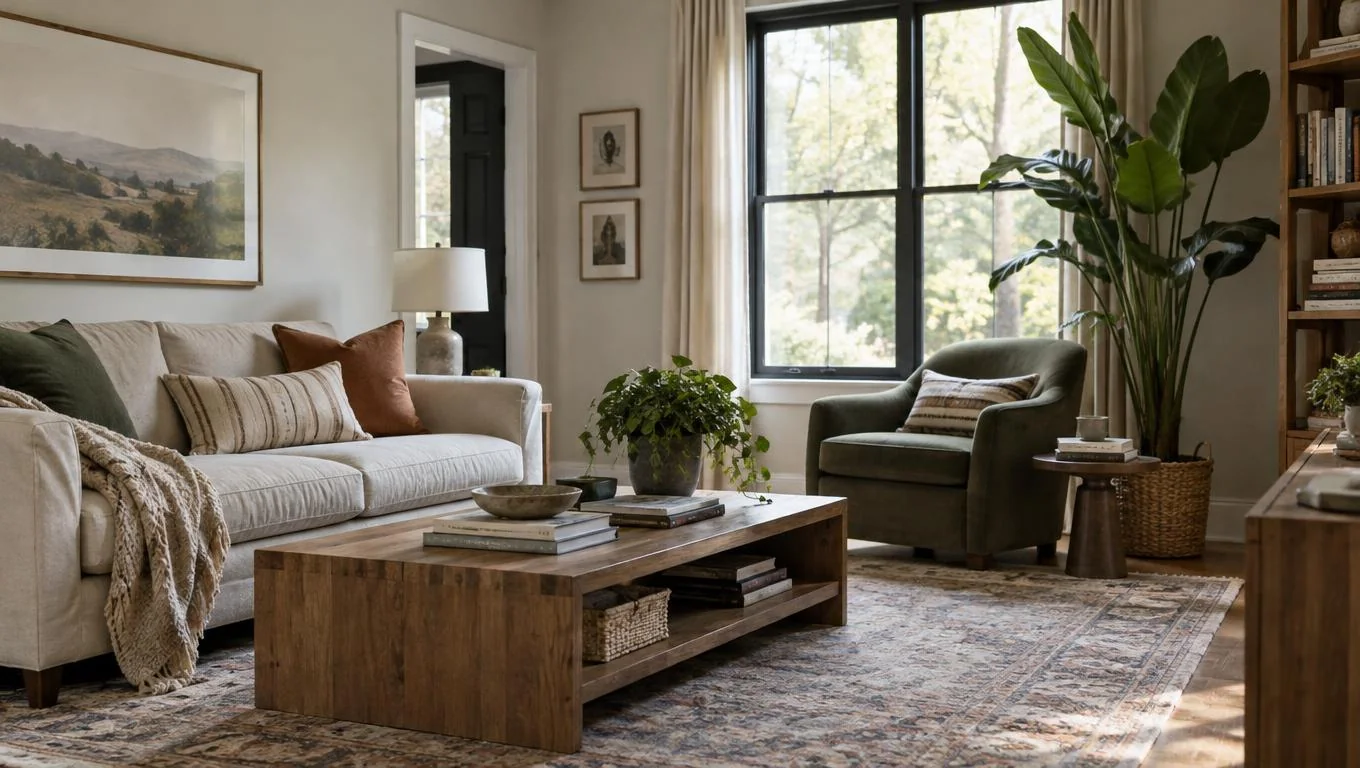
If your living room is mostly furnished but still has a dead corner or a blank stretch of wall, the quickest fix is a single movable piece scaled to that gap: a reading chair for a corner, a console behind a floating sofa, or a tall plant to fill vertical emptiness. You do not need to rearrange the whole room or commit to a big purchase to make the space feel finished.
This guide walks through 12 practical empty space in living room ideas, organized by the type of gap you are staring at: a corner, a long wall, the space behind the couch, or the floor beside a chair. Every idea sticks to furniture and decor you can move, so you are never locked into a mistake. And because the hardest part is imagining how a piece will actually look, we will show you how to preview a corner from a photo before you spend a dollar.
Key Takeaways
- Match the piece to the gap: corners want a chair or plant group, long walls want a console or low shelf, and the space behind a floating sofa wants a slim table.
- Scale is everything. A too-small piece looks lost; a too-big one blocks flow. Measure the gap before you shop.
- Use height to fix dead corners. A floor lamp, tall plant, or bookshelf draws the eye up and makes emptiness feel intentional.
- Keep it movable. Every idea here uses furniture you can shift, so you can test a layout and change your mind.
- Preview before you buy. Seeing a chair or console in your actual room photo removes the guesswork and the return trips.
What Counts as "Awkward Empty Space"?
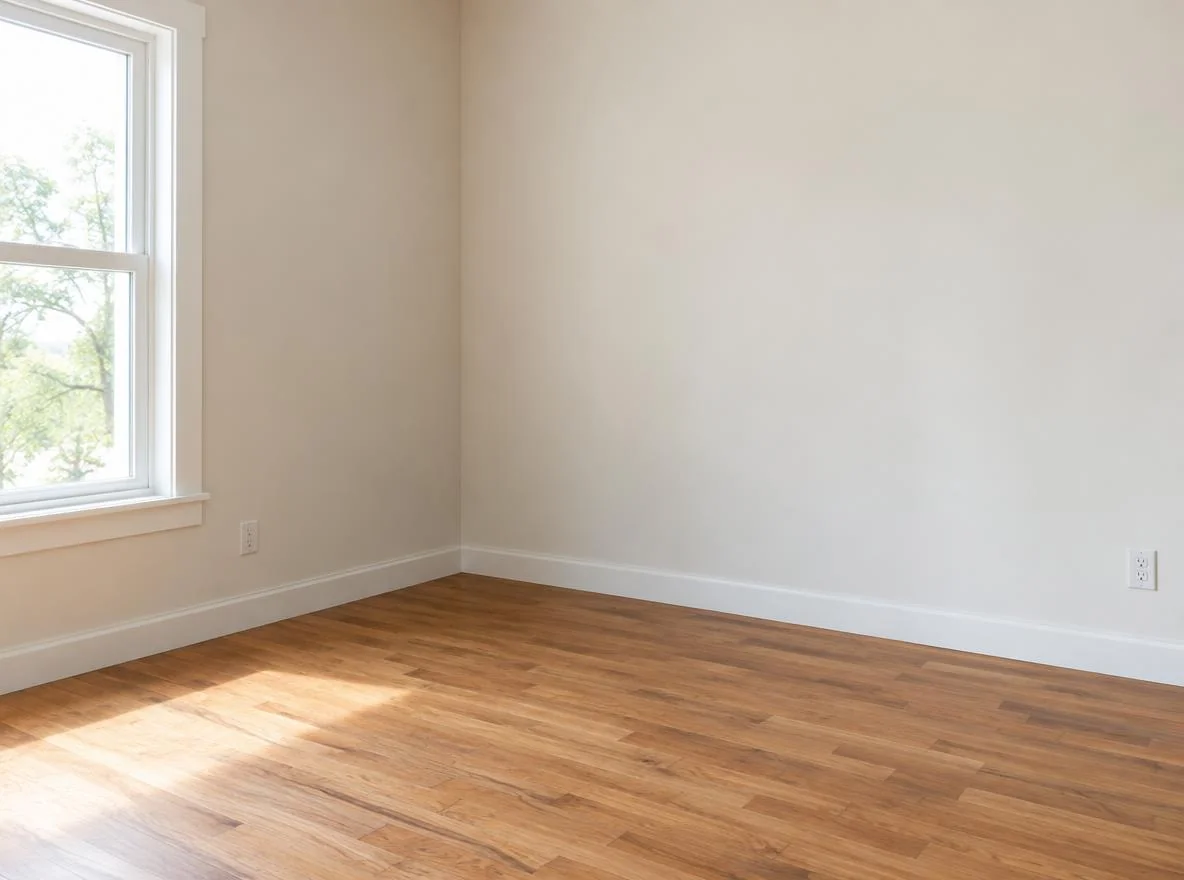
Awkward empty space is any part of a furnished living room that reads as unfinished, not because the room is bare, but because one spot has no clear job. It usually shows up in four places.
Dead corners. The triangle of floor where two walls meet, often behind or beside the sofa, is the most common offender. It collects nothing but shadows.
Blank wall stretches. A long run of wall with no furniture or art below eye level feels hollow, especially behind a dining nook or next to the TV wall.
Behind a floating sofa. When the couch sits out in the room rather than against a wall, the gap behind it can look like a no-man's-land.
Beside a main chair or sofa. The floor next to seating sometimes sits empty when there is no side table or lamp to anchor it.
The fix is almost never "buy more stuff." It is choosing the right single piece, scaled correctly and placed with intention, so the gap stops feeling like an accident. A well-chosen reading chair turns a dead corner into a nook; a console turns a blank wall into a landing zone. Because these are all standalone, movable pieces, you keep full control and can adjust as your needs change.
Why Filling These Gaps Matters
An unresolved empty corner does more than nag at you. It changes how the whole room reads. When one zone has no purpose, the eye keeps snagging on it, and even a nicely furnished space can feel temporary, like you moved in last week and never finished.
Filling awkward gaps thoughtfully does three things. First, it adds function: a reading chair, a console with storage, or secondary seating earns its footprint instead of just occupying it. Second, it balances the room visually, so furniture is not all clustered on one side. Third, it makes a space feel livable and intentional, which is exactly the quality that makes a home feel finished.
The catch is that these gaps are easy to get wrong. People buy a slim console that looks dwarfed on a 12-foot wall, or wedge an oversized armchair into a corner that then blocks the walkway. Because the right answer depends on your exact dimensions and sightlines, it pays to plan the corner before you commit, ideally by seeing the piece in your own room first.
How to Get Started: 12 Ideas by Gap Type
Start by naming the gap. Walk into your living room and note which of the four problem spots you have: a corner, a long wall, the space behind the sofa, or the floor beside your seating. Then pick from the matching ideas below. Each one uses a movable piece, so nothing here is permanent.
Here is a quick reference table matching the most common gaps to the pieces that solve them, with rough footprints so you can sanity-check scale before you shop.
| Gap type | Best fillers | Typical footprint |
|---|---|---|
| Dead corner | Reading chair, tall plant group, floor lamp, corner bookshelf | 24–36 in wide |
| Long blank wall | Console table, low sideboard, bench, accent cabinet | 48–72 in wide |
| Behind a floating sofa | Slim console (sofa table) | 10–14 in deep |
| Beside main seating | Side table + floor lamp, drinks cart, ottoman | 18–24 in wide |
Now the 12 ideas.
1. A reading chair in the corner. A single accent chair angled toward the window turns a dead corner into a purposeful nook. Add a small side table and you have a spot you will actually use.
2. A plant group with varied heights. One plant looks lonely; three in different heights fill a corner with life. A tall fiddle-leaf, a mid-height snake plant, and a trailing pothos cover floor to eye level.
3. A floor lamp to lift the eye. An arc or tripod floor lamp fills vertical emptiness and adds a layer of light that overhead fixtures miss. It is the lowest-commitment corner fix there is.
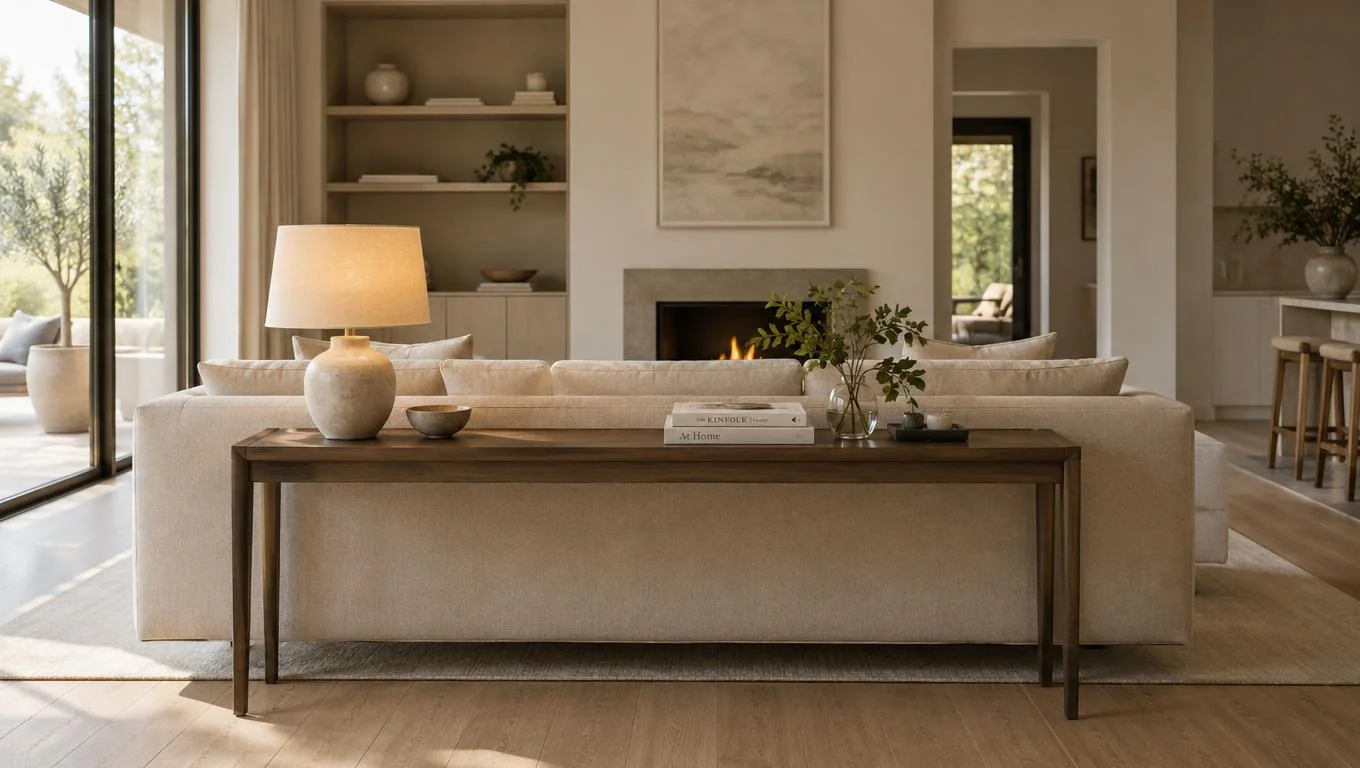
4. A console table behind a floating sofa. A slim sofa table, 10 to 14 inches deep, defines the back of a couch that floats in the room and gives you a surface for lamps or books.
5. A low sideboard along a blank wall. For a long empty stretch, a sideboard adds storage and a display surface, and its horizontal mass balances a tall TV or window wall.
6. Secondary seating. A pair of small accent chairs or a bench creates a second conversation zone and absorbs an awkward gap without the bulk of another sofa.
7. A corner bookshelf. A tall, narrow shelf tucks into a corner and uses the full height of the wall, ideal when floor space is tight but the ceiling is generous.
8. A drinks or bar cart. Compact and mobile, a cart fills a small gap beside seating and doubles as a host station. Roll it away when you do not need it.
9. An ottoman or pouf. Soft, movable, and dual-purpose, an ottoman fills floor space near the sofa and serves as a footrest or extra seat.
10. A bench under a window. A low bench fills a long gap beneath a window, adds seating, and keeps sightlines open because it sits below the sill.
11. An accent cabinet as a focal point. A single statement cabinet on a blank wall becomes an anchor, grounding the surrounding emptiness with color or texture.
12. A floor mirror leaned in the corner. A large leaning mirror fills a corner, bounces light, and makes a smaller room feel bigger, all without drilling a hole.
When you are weighing these against each other, the deciding factor is usually whether your layout can spare the footprint. If you are still working out the broader arrangement, our living room furniture layout guide covers the walkway and spacing rules that keep a filled corner from becoming a trip hazard. And if your room is on the smaller side, the trade-offs shift; see what fits and what to skip in our small living room furniture breakdown.
See Your Empty Room Fully Furnished in 30 Seconds
Upload one photo of your empty room and get a realistic furnished preview in the style you choose — before you buy a single piece of furniture.
Free to try • No design skills needed • Works with any room photo
Furnish My Room →Best Practices for Filling Awkward Spaces
Picking the right piece is half the job. Placing it well is the other half. A few rules keep your corner from looking crammed or, worse, still empty.
Measure the gap first. Note the width, depth, and height you have to work with, then shop to those numbers. A console should span most of a blank wall, roughly two-thirds its length, not float in the middle like an afterthought.
Use height to solve dead corners. Empty corners usually feel empty because nothing draws the eye upward. A tall plant, floor lamp, or narrow shelf fixes that faster than anything placed flat on the floor.
Keep walkways at least 30 inches. Whatever you add, protect the main traffic path. A corner chair is only an upgrade if people can still move through the room comfortably.
Group in odd numbers. Three plants, or a chair-plus-lamp-plus-side-table trio, reads as composed. A lone object in a big corner tends to look stranded.
Echo an existing finish. Tie the new piece to something already in the room, a wood tone, a metal, a fabric color, so it looks chosen rather than leftover.
Before you buy anything, it is worth seeing the piece in context. You can preview a reading chair or console in your actual corner with an AI living room design tool by uploading a photo of the space and generating a furnished version, with no measuring-tape guesswork and no return trips. It is the easiest way to confirm the scale and style work before the delivery truck shows up.
Common Mistakes to Avoid
Buying too small. The number-one error is choosing a piece that disappears in the gap. A narrow console on a wide wall or a single short plant in a tall corner leaves the space looking just as empty as before.
Over-filling the corner. The opposite mistake is cramming an oversized armchair plus table plus floor lamp into a spot that only had room for one. If it blocks the walkway, it is doing more harm than the empty corner did.
Ignoring the room's flow. A piece that looks great in isolation can break the path people take through the room. Always place with traffic in mind.
Treating decor as an afterthought. A console with nothing on it, or a shelf left bare, still reads as unfinished. Plan the surface styling as part of the idea, not a someday project.
Committing before you can picture it. Buying on a hunch is how awkward corners turn into expensive returns. If you cannot visualize the finished result, preview it first.
Final Thoughts
Filling an awkward gap is rarely about buying more. It is about choosing one well-scaled, movable piece and placing it with intention. A reading chair turns a dead corner into a nook, a console tames a blank wall, and a trio of plants adds life where shadows used to sit. Match the piece to the gap, respect your walkways, and use height to lift empty corners, and your furnished room finally feels finished.
The smartest move with any of these empty space in living room ideas is to see it before you commit. Take one clear daylight photo of your empty corner or blank wall, preview a chair or console in the actual space, and let the CTA below handle the next step. For a full room starting from scratch, our guide on how to decorate an empty living room picks up where this one leaves off.
Preview That Awkward Corner Before You Buy
Snap a photo of the empty spot, upload it, and see a realistic furnished version with the chair, console, or plant group you are considering.
Free to try • No design skills needed • Works with any room photo
Furnish My Room →Frequently Asked Questions
What is the best way to fill an empty corner in a living room?
Use a movable piece that adds height, like a reading chair with a side table, a group of varied-height plants, or a floor lamp. Height draws the eye up and makes the corner feel intentional rather than forgotten. Measure the corner first so the piece fills it without blocking the walkway.
How do I fill a long blank wall in my living room?
A console table or low sideboard works best for a long wall. Aim for a piece that spans about two-thirds of the wall's length so it does not look stranded. Add a few styled objects or a lamp on top so the surface reads as finished rather than bare.
What goes behind a sofa that floats in the middle of the room?
A slim console, often called a sofa table, is the classic fix. Choose one 10 to 14 inches deep so it defines the back of the couch without crowding the walkway behind it. It also gives you a surface for lamps, books, or a tray.
How do I know if a piece is the right size for the gap?
Measure the width, depth, and height of the empty space and shop to those numbers. As a rule, fillers for a wall should cover about two-thirds of its length, and corner pieces should use the vertical height. Previewing the piece in a photo of your room removes the remaining guesswork.
Can I see how furniture will look in my corner before buying it?
Yes. Upload a photo of the empty corner or wall to an AI room design tool and generate a furnished version showing the chair, console, or plant group in place. This lets you confirm scale and style in your actual space, so you avoid costly returns and buying mistakes.
